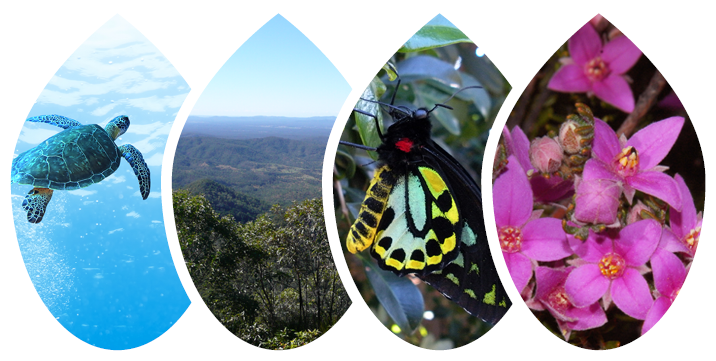

Threatened species
Each one of Queensland's native plants and animals is a unique and valuable part of our state's rich biodiversity. Yet some of these species have declined in numbers and are even threatened with extinction. Today a range of threatening processes is impacting on an increasing number of these species.
To counter this, the department is actively protecting Queensland's wildlife and the regional ecosystems in which they live. For threatened species there are a range of management and recovery actions being developed and acted on to ensure their ongoing survival.
Under the Nature Conservation Act 1992 (NCA) all native plants and most native animals are protected. The NCA categorises protected species—extinct in the wild, endangered, vulnerable, near threatened and least concern—based on trends in population size, health and distribution. Under the NCA, endangered and vulnerable species are deemed to be ‘threatened species’. To protect threatened species we must understand how they live, how we impact on them and, most importantly, how we can help them survive.
Download the nomination form and guidelines for listing protected wildlife under the Nature Conservation Act 1992.
Changes to the way species are listed
An amendment to the NCA in June 2004 incorporates new categories for protected species in Queensland.
The previous system of categorising species (presumed extinct, endangered, vulnerable, rare and common) did not provide a consistent framework for managing species. Some of these categories are based on abundance and/or distribution of species and others on the level of threat to the species. Changes to the categories will more closely align the classification of Queensland species with the World Conservation Union (IUCN) and other Australian jurisdictions and will provide consistency across categories in signifying level of threat. The new categories are: rare (which will be phased out by 2010), extinct in the wild, endangered, vulnerable, near-threatened and least concern.
Species listed as common have been automatically listed as least concern. Species listed as rare are being progressively reviewed to determine which of the new categories most adequately describe their status.
Related information
* Requires Adobe Reader
‡ Requires Microsoft Office files viewer